Swiss Design at production scale
Balancing design intent with manufacturable robotics paths across complex assemblies. The programme required repeatable tolerances on large sculpted surfaces without sacrificing iterative speed.
- Robotic CNC
- Hybrid workflow
- Design for manufacturing
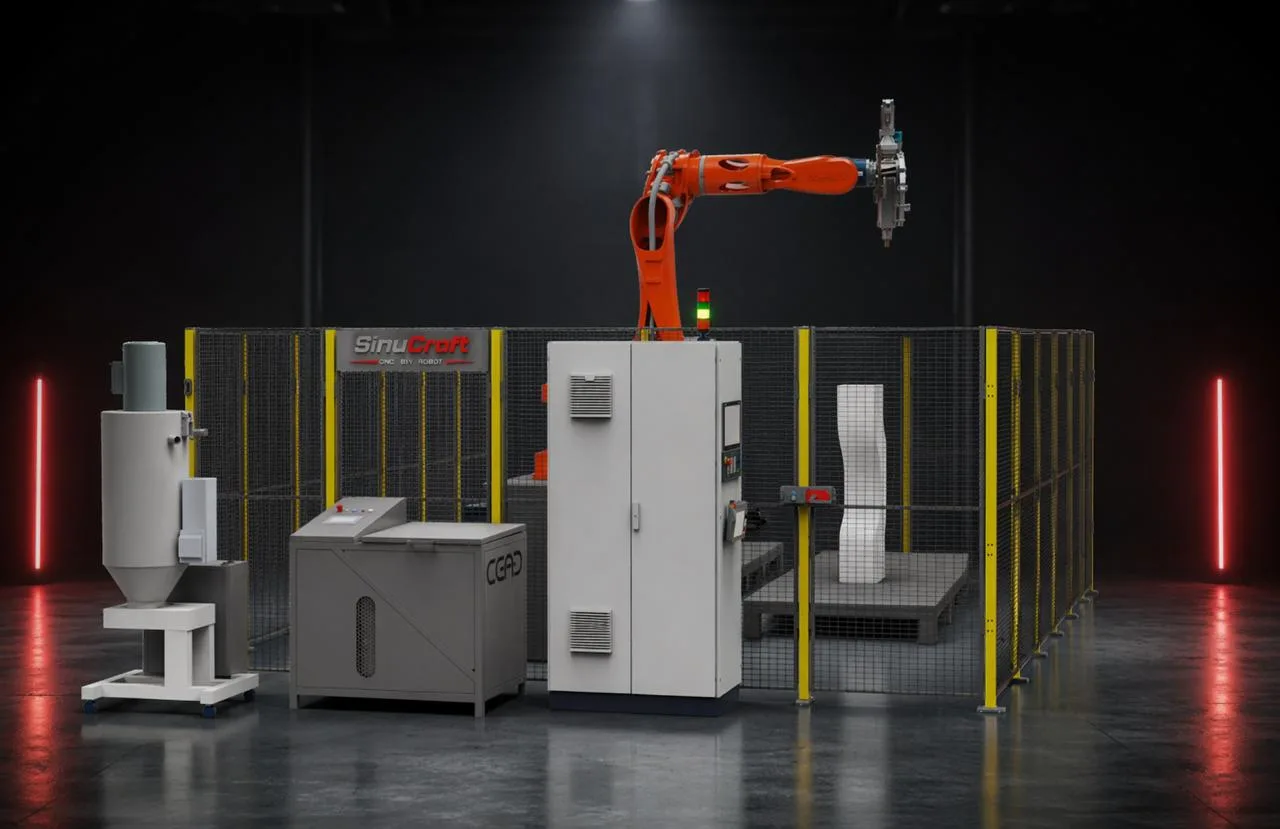
Programme context
The studio needed life-size validation parts that could be reviewed with architects and fabricators on short cycles. Traditional segmented milling and manual assembly could not hold schedule once geometry complexity increased.
SinuCraft supplied a hybrid workflow: near-net additive structure for volumetric fidelity, followed by robotic milling for mating interfaces and hardware pockets.
Documentation and repeatability were treated as first-class requirements so downstream variants could reuse the same process library.
Engineering approach
Toolpaths were authored with the same NX-to-controller discipline used on production CNC lines, avoiding one-off glue scripts between departments.
Kinematic transforms and fixture strategy were locked early so robot reach and spindle access stayed predictable as the model evolved.
Surface finishing targets were defined as measurable bands so QA could sign off without ad-hoc hand polishing.
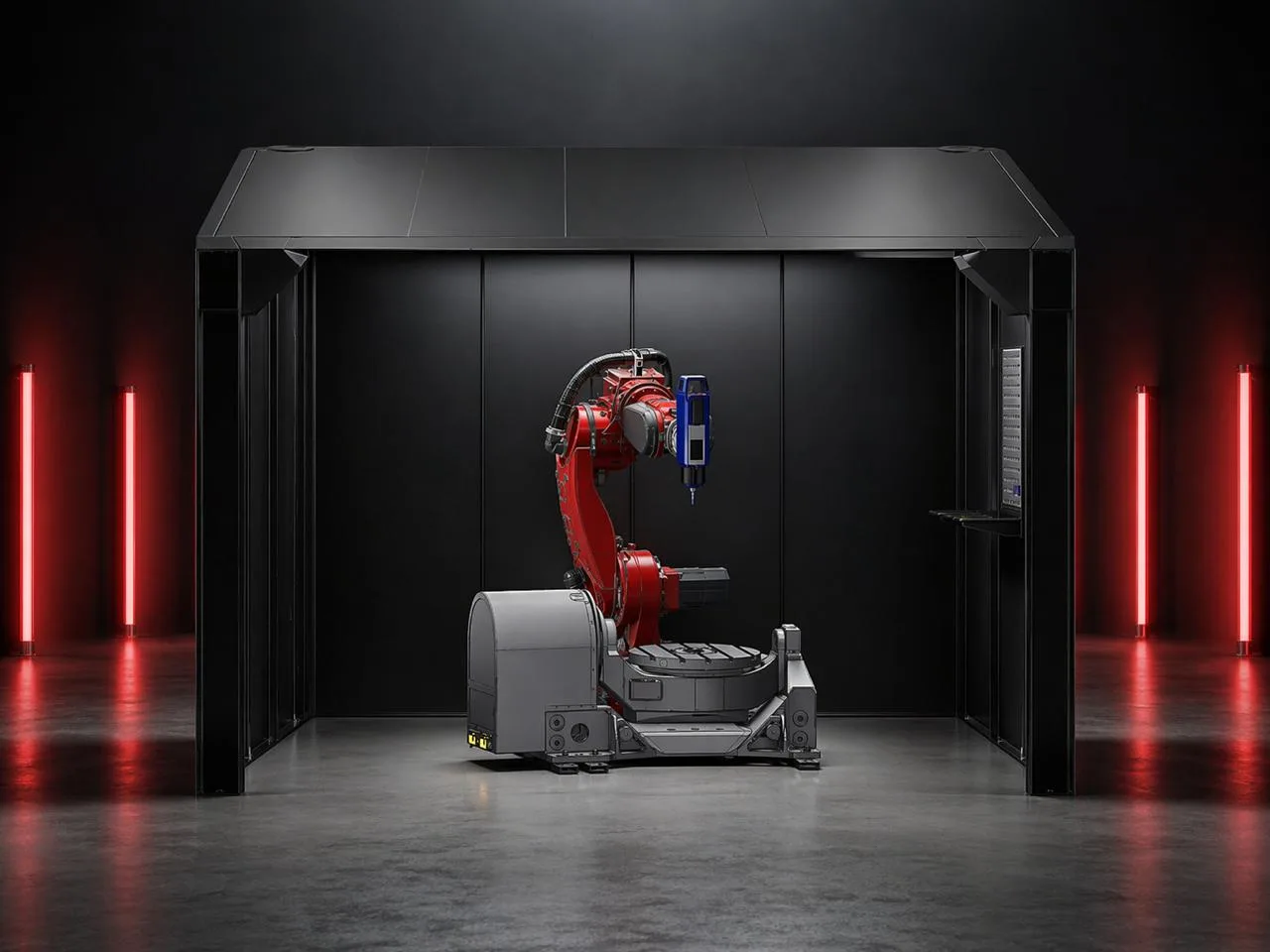
Outcomes
Manual rework dropped materially once hybrid routines stabilized, and design freeze windows shortened because physical review models arrived earlier in the programme.
The team exported a documented process library that could be replayed on follow-on variants with minimal re-programming.
Stakeholders gained confidence that large organic geometry could be manufactured without defaulting to heavier, slower conventional approaches.
Client voice
“SinuCraft gave us a credible path from sculpted concept to something we could review at full scale—without splitting the geometry into a patchwork of small jobs. The hybrid workflow became our default for public-space programmes.”

Elena Vogt
Programme Director // Swiss Design Studio
FAQs
Let's talk
Share your requirements and we'll show you how additive and subtractive manufacturing merge into a single, optimized setup.